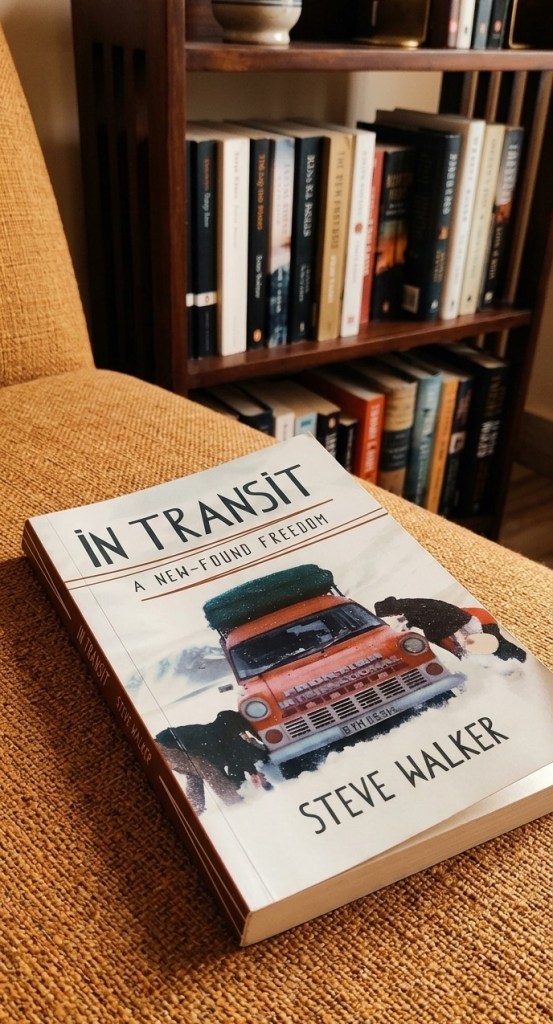
A Journey That Changed More Than Destinations
Sometimes, a single journey is enough to change the direction of an entire life. In Transit by Steve Walker is a remarkable memoir that captures exactly that transformation. Set against the backdrop of the late 1960s and 70s, the book follows the author’s deeply personal journey from an uncertain young man in Essex, UK, to someone shaped by travel, adventure, friendships, heartbreak, and self-discovery.
What makes this memoir stand out is that it does not begin with an experienced traveller or a fearless adventurer. Instead, it begins with an ordinary young man trying to understand where he belongs in life.
From Essex to the Unknown
Growing up in Essex during the 1950s and 60s, Steve lived a routine and sheltered life. After leaving school at sixteen, he moved through several jobs without finding real purpose or direction. There is an honesty in the way he describes those early years, particularly his struggles with confidence and his introverted nature.
At the centre of this phase of life is heartbreak and emotional uncertainty. His difficult relationship, combined with a near-fatal car accident while driving to meet his girlfriend, becomes one of the defining turning points of the memoir. Surviving that accident forces him to confront how fragile life can be and pushes him toward change.
Soon after, a small advertisement in the Sunday Express inviting young people to join a safari trip to Morocco unexpectedly opens the door to an entirely different world. What begins as an escape slowly evolves into years of travel across Europe, Asia, and Africa.
The Spirit of Overland Travel
One of the strongest aspects of In Transit is how vividly it captures the culture of overland travel during the late 1960s and 70s. This was a time before digital maps, smartphones, and luxury tourism. Travel felt uncertain, raw, and unpredictable, and that atmosphere runs through every chapter of the memoir.
The book takes readers across crowded Moroccan souks, mountain roads in Anatolia, beach camps in Greece, desert routes through North Africa, and long overnight drives through unfamiliar countries. Yet the memoir never reads like a travel brochure. What makes the experiences memorable is the way they are tied to emotion, fear, humour, exhaustion, and human connection.
One particularly fascinating part of the memoir is Steve’s early experience as an overland driver. Despite having little practical experience, he suddenly finds himself driving groups of travellers through foreign countries and dangerous conditions. His nervous overnight drives through France and the freezing mountain roads of Turkey become some of the most gripping moments in the book because they feel so genuine and unfiltered.
The memoir constantly balances adventure with vulnerability. Readers are not simply watching someone travel; they are watching someone grow into himself through those journeys.
Human Connections at the Heart of the Story
While the landscapes and adventures are memorable, the emotional core of In Transit lies in the people encountered along the way. Throughout the memoir, Steve introduces readers to fellow travellers, drivers, locals, and companions who become central to his journey.
Some friendships are humorous and chaotic, filled with youthful energy and spontaneity. Others carry emotional weight and nostalgia, especially when reflecting on people who are no longer alive. These moments give the memoir warmth and sincerity, preventing it from becoming simply a collection of travel stories.
The book also beautifully captures how travel creates temporary communities between strangers. Whether sharing food in a Greek village, navigating difficult roads together, or sleeping under desert skies, there is a constant sense of companionship running through the narrative.
Somewhere between those endless roads and border crossings, Steve also meets the woman who later becomes his wife, making the memoir not only a story about travel, but also about love and belonging.
A Portrait of an Era
Another compelling element of In Transit is the way it preserves the atmosphere of a vanished era. The late 1960s and early 70s were marked by freedom, spontaneity, music, counterculture movements, and a growing fascination with global exploration. The memoir captures this spirit naturally through its storytelling.
There are scenes filled with late-night music, improvised journeys, roadside cafés, crowded ferries, campsite friendships, and long conversations between strangers from different parts of the world. Readers get a strong sense of what travel felt like during a time when the world still carried mystery and unpredictability.
The memoir also reflects the emotional freedom many young people were searching for during that period. Travel becomes more than movement across countries; it becomes a way of escaping limitations and discovering identity.
Honest Storytelling and Memorable Experiences
What makes Steve Walker’s writing effective is its honesty. He does not attempt to present himself as heroic or flawless. Instead, he openly shares fear, mistakes, awkwardness, confusion, and uncertainty.
Some of the most unforgettable moments come from this honesty:
- nervously driving through unfamiliar roads with passengers depending on him,
- surviving harsh winter conditions in the Anatolian mountains,
- waking before dawn in the Sahara,
- discovering Greek hospitality and friendships,
- and slowly adapting to a life that once felt impossible for someone like him.
The memoir succeeds because these experiences feel lived rather than dramatized. The storytelling carries humour and warmth without losing emotional depth.
More Than a Travel Memoir
At its heart, In Transit is not simply about travelling across continents. It is about transformation. The roads Steve travels gradually shape his confidence, resilience, identity, and understanding of life itself.
The memoir explores how travel changes people emotionally and psychologically. It challenges insecurities, pushes boundaries, and forces growth in unexpected ways. By the end of the book, readers realise that the most important journey is not geographical, but personal.
In Transit is a beautifully written memoir filled with warmth, humour, vulnerability, nostalgia, and adventure. Steve Walker creates a vivid portrait of a time when travel felt uncertain and alive, while also telling a deeply personal story about finding meaning through movement and experience.
The memoir feels like sitting beside someone who has truly lived, listening to stories gathered across continents, cultures, friendships, and decades of unforgettable experiences.
For readers who enjoy travel literature, memoirs, and stories of personal transformation, In Transit is an absorbing and memorable read that quietly reminds us how one unexpected decision can alter the course of an entire life.
About the Author
Steve Walker is a former overland driver whose experiences travelling across Europe, Asia, and Africa during the late 1960s and 70s became the foundation for In Transit. Drawing from real-life journeys, friendships, and adventures, he captures a unique era of travel that blended freedom, uncertainty, cultural exploration, and human connection. His storytelling combines vivid travel experiences with personal reflection, making the memoir both adventurous and emotionally resonant.
#BookReview #InTransit #SteveWalker #TravelMemoir #AdventureTravel #TravelLiterature #Memoir #BookLovers #LiteraryReview #Books
 Bookish Brewing
Leave a comment