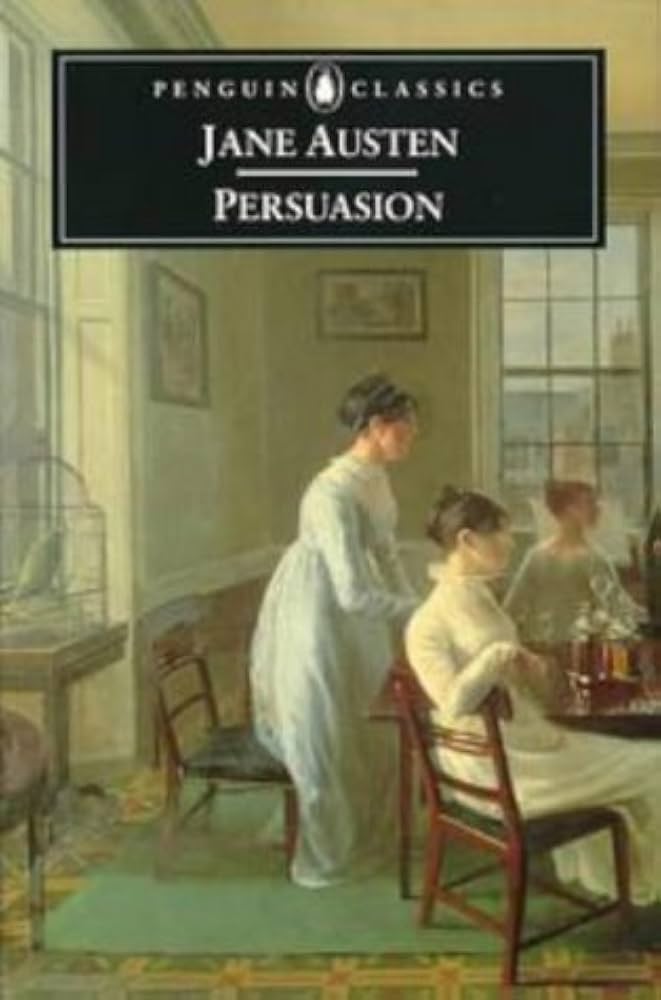
Among Jane Austen’s novels, Persuasion holds a special place. Published in 1817, shortly after Austen’s death, the novel carries a deeper emotional tone than many of her earlier works. While her famous novels such as Pride and Prejudice and Emma explore wit, social observation, and romance, Persuasion feels more reflective and mature. It tells a story about lost opportunities, quiet resilience, and the possibility of love returning even after years of separation.
At its heart, Persuasion is not simply a romantic novel. It is a thoughtful exploration of how time, regret, and personal growth shape the choices we make in life.
A Story of Love Interrupted
The novel follows Anne Elliot, the middle daughter of Sir Walter Elliot, a vain and status-conscious baronet. Unlike many heroines of her time, Anne is quiet, thoughtful, and deeply perceptive. Years before the events of the novel begin, Anne had been engaged to a young naval officer named Captain Frederick Wentworth.
However, Anne’s family and her trusted family friend, Lady Russell, persuaded her to break the engagement. They believed that Wentworth had neither wealth nor social status and therefore could not offer Anne a secure future. Respecting their advice, Anne reluctantly ended the relationship.
Eight years later, the story begins when Captain Wentworth returns from the Napoleonic wars as a successful and wealthy naval officer. The world has changed, and so have the characters within it. Yet the past continues to linger between Anne and Wentworth, creating a tension that quietly drives the narrative forward.
Austen builds this emotional tension with remarkable subtlety. The characters rarely speak directly about their feelings, yet every glance, conversation, and silence carries meaning.
The Quiet Strength of Anne Elliot
Anne Elliot stands apart from many literary heroines because of her quiet strength. She is not outspoken or rebellious. Instead, her character is defined by patience, empathy, and emotional intelligence.
Throughout the novel, Anne often finds herself overlooked by her self-absorbed family. Sir Walter and her elder sister Elizabeth care deeply about appearances, social rank, and wealth, while Anne’s thoughtful nature receives little recognition.
Yet it is Anne who demonstrates the greatest maturity and depth. She listens carefully, observes human behavior with clarity, and maintains kindness even when others fail to appreciate her.
What makes Anne compelling is her inner growth. Over the course of the story, she gradually regains confidence in her own judgment. The young woman who once allowed others to persuade her eventually learns to trust her own understanding of love and life.
Persuasion and the Influence of Society
One of the central themes of the novel is persuasion itself. Austen examines how external influences can shape personal decisions, sometimes with lasting consequences.
Anne’s broken engagement illustrates how powerful social pressure can be. At the time, the advice she received seemed reasonable. Yet as the years pass, Anne begins to recognize that her own feelings were sacrificed to satisfy the expectations of others.
Through this theme, Austen raises a subtle question for readers. When should we listen to the guidance of others, and when should we trust our own instincts?
The novel does not offer a simple answer. Instead, it explores the delicate balance between wisdom, influence, and personal conviction.
Time, Regret, and Second Chances
Another powerful element of Persuasion is its exploration of time. Many romantic stories focus on the excitement of new love, but Austen takes a different approach here. She writes about love that has already been lost once.
Anne and Wentworth must confront the past before they can imagine a future together. The years that have passed between them are filled with unspoken emotions, misunderstandings, and lingering regret.
Yet Austen suggests that time can also deepen understanding. Both characters grow through their experiences. By the time they meet again, they are wiser, stronger, and more capable of appreciating what they once lost.
The famous letter that Captain Wentworth writes near the end of the novel remains one of the most powerful declarations of love in English literature. In that moment, Austen beautifully captures the idea that genuine love can endure even after years of separation.
Austen’s Subtle Social Commentary
As in her other works, Jane Austen carefully observes the social world of early nineteenth-century England. The novel portrays a society that places great importance on class, reputation, and financial stability.
Through characters like Sir Walter Elliot and Elizabeth Elliot, Austen gently criticizes the obsession with social status. Their concern with appearances often contrasts sharply with Anne’s deeper values.
At the same time, Austen also highlights the rising importance of merit and achievement. Naval officers such as Captain Wentworth represent a new form of social mobility. Their success is earned through service and courage rather than inherited wealth.
This contrast reflects the changing social landscape of Austen’s time.
Why Persuasion Still Resonates Today
Despite being written more than two centuries ago, Persuasion remains deeply relatable. Many readers recognize the emotional themes at the heart of the novel.
The story speaks about regret, missed opportunities, and the hope of redemption. It reminds us that life rarely moves in a straight line. Sometimes understanding arrives later than we expect, and second chances appear only after we have grown enough to appreciate them.
Anne Elliot’s journey also offers a powerful reminder about the importance of self-trust. Listening to others can be valuable, but ultimately every person must learn to stand by their own convictions.
About the Author — Jane Austen
Jane Austen (1775–1817) is one of the most celebrated novelists in English literature. Born in Hampshire, England, she grew up in a close-knit family that encouraged reading, storytelling, and intellectual curiosity.
Austen wrote six major novels, including Sense and Sensibility, Pride and Prejudice, Mansfield Park, Emma, Northanger Abbey, and Persuasion. Her works are known for their sharp social observations, memorable characters, and subtle humor.
Although her novels were initially published anonymously, they gradually gained recognition for their literary brilliance. Today, Jane Austen’s writing continues to influence literature and remains beloved by readers around the world.
Persuasion, her final completed novel, stands as one of her most mature and emotionally resonant works, offering a thoughtful reflection on love, time, and the courage to follow one’s heart.
 Bookish Brewing
Leave a comment