Ahhh! How to begin, and from where to start, to tell about Mother Mary Comes to Me by Arundhati Roy?
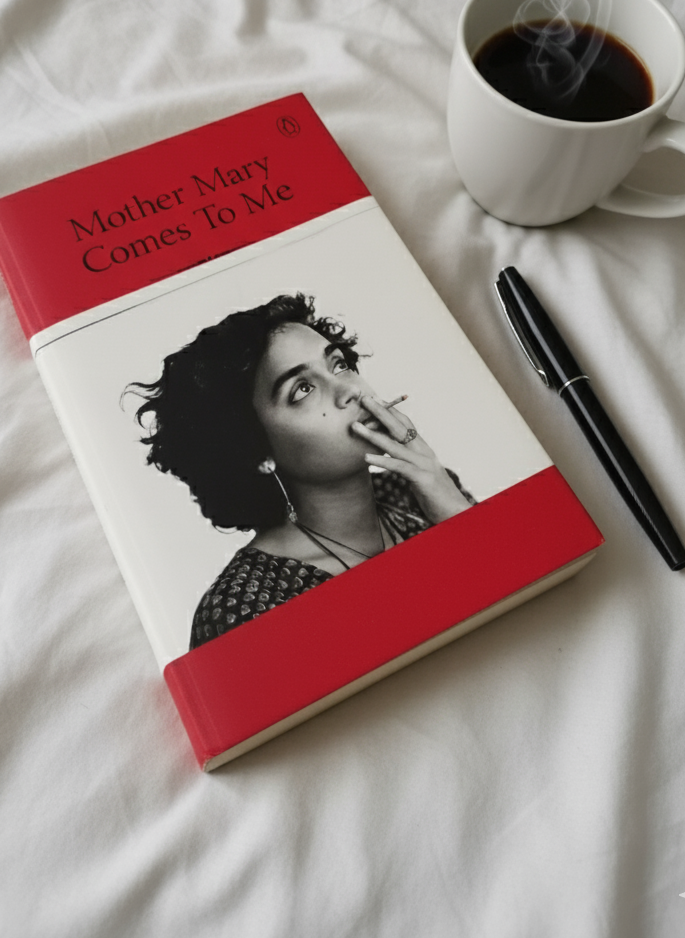
This memoir is not just a story of a celebrated author but a layered, intimate journey that stretches across six decades of life, love, survival, and resilience. While it is Arundhati Roy’s memoir, it is her mother, Mary Roy, who stands at the center, sometimes as a protagonist, sometimes as an antagonist. Each chapter unfolds with curiosity, making you pause and reflect on why events happened the way they did.
The opening chapter, titled Gangster, instantly makes you wonder why such a striking word was chosen. Yet as the pages turn, it feels like the only apt title. The words are sharp, raw, and brutally honest, painting a reality that is at once deeply personal and universally relatable.
Childhood and Family Struggles
Arundhati Roy was born into a Syrian Christian family, a daughter to Mary Roy and Micky Roy. Her early childhood was far from idyllic. When she was barely three years old, her mother left her alcoholic husband and returned to her maternal home in Ooty. Arundhati’s brother, Lalith Kumar Christopher Roy, was just four and a half then. What followed was a series of struggles, heartbreaks, and resilience, as Mary Roy fought for her children and her own dignity.
The memoir vividly recounts Mary Roy’s fight for her rightful assets and how she even moved her brother G. Isaac out of the family home in order to secure her future. The way Arundhati narrates this shows how her mother was both a fighter and a paradox, unyielding for others, yet often harsh with her own children.
Teenage Years, Architecture, and JC
Arundhati Roy’s teenage years were marked by a restless longing for independence. Growing up under the shadow of a powerful mother, she craved space where she could breathe freely and make her own choices. It was her mother’s harsh words and cold treatment that drove her to seek life beyond home at an early age.
With little more than courage and determination, she moved to Delhi to pursue her studies at the School of Planning and Architecture (SPA). It wasn’t an easy transition, she arrived in a city where she knew no one, had no support system, and often lived with the bare minimum. Roy herself recalls how she lived in modest housing, wore used clothes, and survived with very little, yet her ambition to create something meaningful kept her going.
It was during this period that JC came into her life. JC became both a partner and a supporter, offering her the financial stability she desperately needed to continue her education.
Arundhati married JC at a very young age, perhaps too young to fully understand the complexities of marriage. But at that moment, it seemed like the right step: a partnership built on mutual dependence, love, and the dream of a shared future. With JC’s support, she completed her architecture degree, proving once again her resilience and determination to push through challenges.
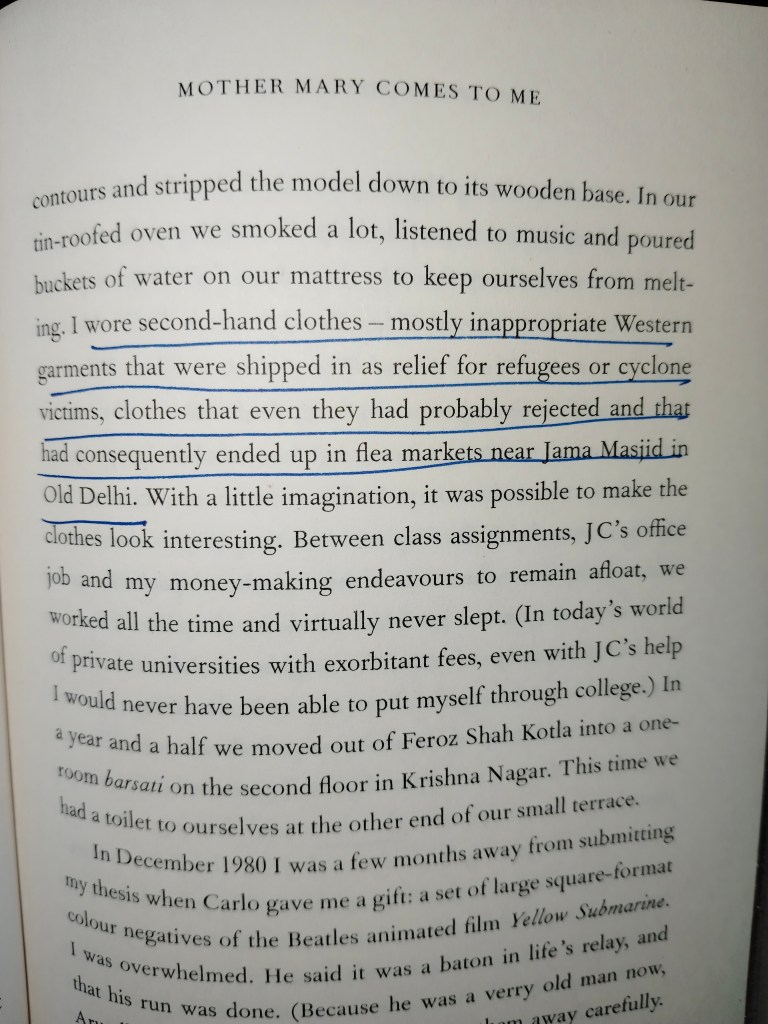
After her graduation, the couple moved to Goa, to JC’s family home. The shift from Delhi’s creative buzz to Goa’s household turned out to be a turning point. At first, it seemed like a fresh chapter, but soon cracks began to appear.
For Arundhati, Goa represented confinement rather than freedom. She was a woman with ideas, a growing voice, and an insatiable need to explore the world on her terms. The marriage, though supportive at the start, could not nurture that part of her.
Eventually, she made the difficult decision to leave JC and his family home behind. She returned to Delhi, choosing once again the uncertainty of independence over the safety of an unhappy marriage. This move was not just a physical shift but also a symbolic one, it marked her first real step toward carving her own identity as a writer, thinker, and eventually, a global literary force.
Survival in Delhi
When Arundhati Roy returned to Delhi after leaving Goa, she entered one of the most challenging yet defining phases of her life. Survival in the capital wasn’t just about paying rent or finding food, while she carried the weight of her past and the uncertainty of her future.
She lived in modest housing, places that were far from glamorous, sometimes barely comfortable. Money was always short, and her life was stripped down to essentials.
But what strikes me most about these chapters is how she never portrayed those years as wasted. They were years of survival, yes, but also years of becoming. She explored different kinds of work, taking up whatever came her way
Cinema, Screenplays, and Pradeep Krishen
Back in Delhi, Arundhati Roy’s years of survival gradually led her into the world of cinema. Her first real entry came with Massey Sahib (1985), where she took on an acting role. It was on this project that she met filmmaker Pradeep Krishen, the director. Although Pradeep was already married with two children, a strong connection formed between them, built on shared creativity, curiosity, and a keen sense of storytelling. Working closely on the set, they discovered a mutual understanding of narrative, humor, and the subtleties of human behavior.
This connection soon grew into a deep professional and personal bond. They began writing together, exploring stories that drew from real experiences while experimenting with cinematic form. In 1989, Arundhati wrote and acted in In Which Annie Gives It Those Ones, a semi-autobiographical tale of architecture students, which captured her wit, intelligence, and keen eye for the absurdities of life. She continued to expand her creative range, writing the screenplay and designing the production for Electric Moon (1992).
Through this period, her bond with Pradeep was complex yet creatively inspiring—supported her growth as a writer and artist. Their partnership, though unconventional, offered her a space where her voice and creativity could flourish, shaping the foundation of her later literary career.
The God of Small Things – Fame and Controversy
The defining moment of Arundhati Roy’s literary journey came with The God of Small Things. She devoted three years to crafting the novel, pouring her experiences, memories, and acute observations of human relationships into its pages. The first person she entrusted with the manuscript was Pradeep, a testament to the deep creative bond and trust they had built over the years. Others, editors, friends, and mentors, also played crucial roles in refining the story and helping bring it to the wider world.
When the novel was published, it captured hearts and minds alike, earning the Booker Prize in 1997 and catapulting Arundhati to international fame. Its lyrical prose, intricate structure, and fearless exploration of taboo subjects set it apart. However, fame was accompanied by controversy. Critics debated her bold use of language, particularly her candid references to sexuality, and the unconventional narrative style challenged traditional storytelling norms. Some readers were divided, yet many celebrated the novel’s originality, emotional depth, and unflinching honesty.
Writer First – Not an Activist
Despite her global fame, Arundhati Roy was careful about how she defined herself. She never wanted to be called an “activist,” insisting that her first and foremost identity was that of a writer.
To her, writing was her true rebellion—a way to speak, challenge, and give voice to the marginalized without being confined by labels. Yet, her words and convictions inevitably drew her into activism. She stood with the Narmada Bachao Andolan, raising her voice against the displacement of communities for the Sardar Sarovar Dam, and spoke passionately about the situation in Kashmir.
Her involvement was not just symbolic; she even faced imprisonment for a day as a protest against injustices she could not ignore.
Through it all, Roy demonstrated that activism for her was inseparable from writing, her pen was her tool, and every public act of protest was an extension of her literary conscience. She gave without seeking applause, showing that one could fight for justice while remaining, above all, a writer.
Family, Loss, and Reflection
Roy’s memoir also delves deeply into the personal, charting the complexities of family, love, and loss. She recounts her father’s absence and eventual death, the sorrow of her mother Mary Roy’s passing, and the tangled web of relationships with relatives such as her uncle Isaac. Amid public acclaim, the Booker ceremony, literary awards, and global recognition these personal losses remained private, quietly shaping her worldview.
In reflecting on these moments, Roy reveals a duality: a woman celebrated worldwide, yet profoundly aware of life’s intimate fragilities, finding in writing both solace and confrontation with her own memories.
Arundhati Roy: Fearless Writer, Uncompromising Self, and a Daughter’s Enduring Love
Arundhati Roy emerges from her memoir not just as a writer of global fame, but as a philosopher of life in her own right, someone who earned, gave, and never expected anything in return.
Her love for her mother, even from a distance, remained a quiet, enduring force, shaping her understanding of care, resilience, and family. Roy wrote with fearless honesty, unbound by trends or the pursuit of acclaim; her stories, sharp and intimate, were always true to her vision.
More than fame, she valued the freedom to be herself, embracing life’s contradictions with courage and wit.
Yet, amid all this, one line lingered hauntingly as the book drew to a close the sharp, unforgettable words of her mother: “Get out of my house! Get out of my car!”—a reminder of the complexities of love, independence, and belonging that defined her journey.
 Bookish Brewing
Leave a comment